
Blaze of Battle
Leyi Classic GamesStrategy
3.710.95K Reviews
- Version
- 9.1.3
- Installs
- 1.00M
- Age Rating
- Teen
Screenshots
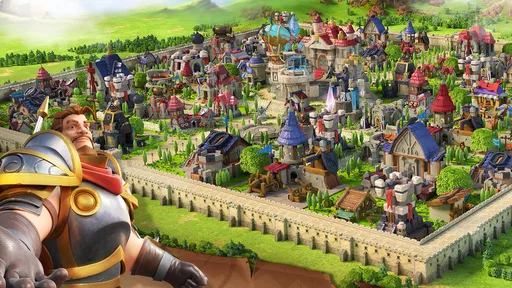
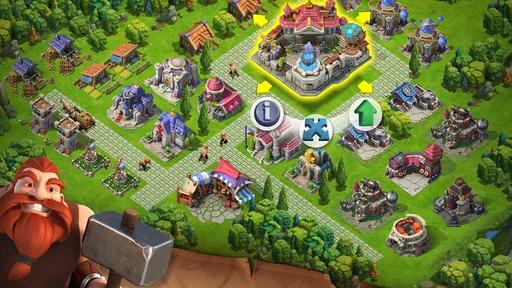
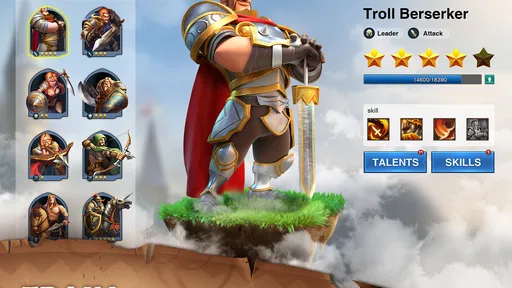
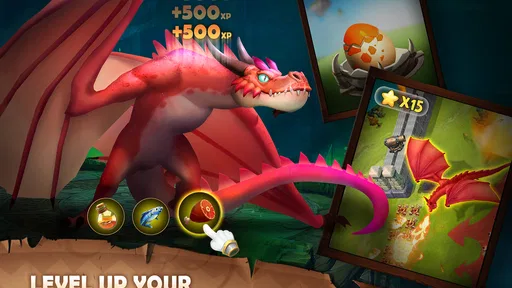
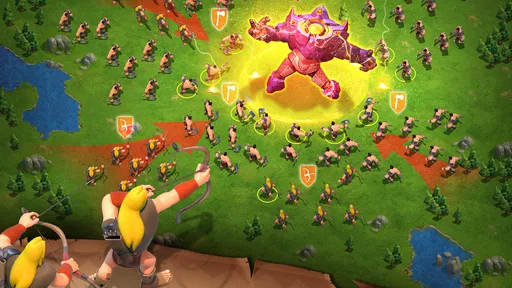
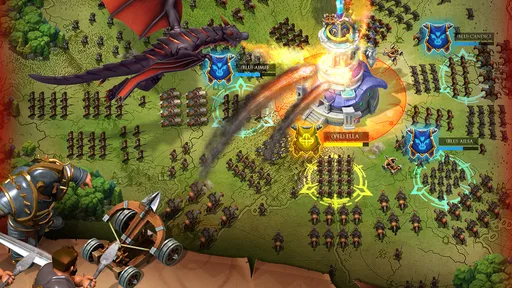
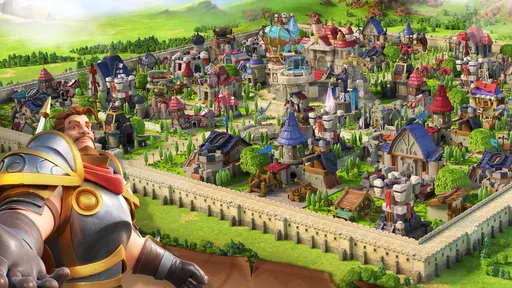
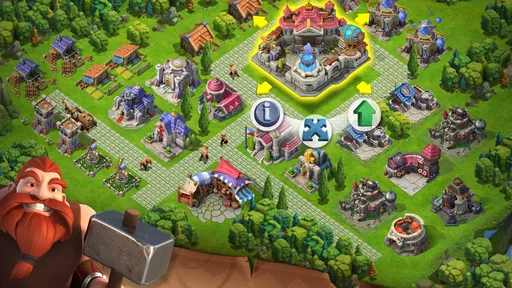
Our Review of Blaze of Battle
 Analysis by Appyee
Blaze of Battle is the kind of strategy game that tries to make empire management feel immediate rather than abstract. I spend my time expanding a settlement, preparing troops, watching resources, and deciding when a march is worth the risk. The presentation aims for a dramatic fantasy-war mood, but the real test is whether that mood supports sensible decisions instead of simply decorating a familiar loop. After spending time with it, my view is mixed in a useful way: it can be engaging when I want a steady strategy routine, yet it asks for patience and a willingness to live with pressure from timers, upgrades, and purchases.
Developed by Leyi Classic Games, it is a free strategy game for teenagers and older players. It has been available since June 17, 2016, and the current version is 9.1.3, with Android support starting at version 6.0. Its audience is clearly established: the game has passed one million installs, with an average rating of 3.7 from around 80 thousand ratings and roughly 11 thousand written reviews. Those numbers do not make it an automatic recommendation, but they do show that this is a long-running game with a substantial player base rather than a short-lived experiment.
From a dramatic first impression to a slower strategic routine
My first impression was shaped by the contrast between the urgent battle language and the slower pace underneath it. The game presents empire building as a military project, so the early experience naturally encourages me to think about troops, territory, and the next confrontation. That framing is effective because it gives ordinary upgrades a clear purpose. Improving a building is not just maintenance; it is preparation for a more capable kingdom.
At the same time, the opening mood can make the game feel more action-focused than it really is. This is not a strategy title where every moment demands rapid reactions. Much of the satisfaction comes from setting a plan, starting progress, and returning later to see whether the plan has created a stronger position. I found that the best sessions were not necessarily the longest ones. A short check-in was enough to collect progress, adjust priorities, and decide whether to commit resources or wait.
That makes it a reasonable fit for someone who enjoys a persistent mobile strategy game rather than a self-contained campaign. If I want a complete match with a clear ending, a traditional board-game adaptation or a compact tactical game suits me better. Here, the appeal is the continuing state of the empire. There is always another improvement to consider, another military question to weigh, or another reason to return.
The free entry point is helpful, especially for players who want to understand the loop before spending anything. However, the in-app purchase range is broad, running from $0.99 to $299.99 per item. I would treat that as an important part of the decision, not a footnote. The game is easier to recommend to players who can enjoy gradual progress without feeling compelled to buy acceleration. Anyone who dislikes monetized progression should approach it cautiously, even if the initial download costs nothing.
A world built from readable signals
The setting communicates through familiar fantasy-war ideas: a growing stronghold, trained forces, expansion, and the constant possibility of conflict. I do not need a long explanation to understand what the game wants me to feel. Buildings represent stability and preparation, troops represent reach, and the surrounding world suggests that remaining passive forever is not the safest plan.
That clarity is one of the game’s strongest artistic choices. The visual language does not need to be subtle to be useful. A fortified settlement feels different from an exposed position, and a military decision feels more serious when the interface places it inside a world that looks built for rivalry. The result is a coherent playable mood: I am not merely moving icons through menus; I am managing a place that is supposed to survive.
Still, the atmosphere depends heavily on my willingness to engage with the long-term loop. If I ignore the strategic context and treat every screen as a checklist, the setting loses much of its force. The same upgrade can feel meaningful when it supports a plan and routine when I start tapping through tasks without considering the wider position. This is a game where presentation works best when the player supplies the strategic imagination.
One useful habit is to connect every improvement to a specific short-term purpose. Instead of upgrading whatever becomes available, I ask whether I am trying to strengthen defense, support a military push, or improve the economy behind the next stage. That small change makes the world feel more coherent because the settlement develops according to my priorities rather than according to a random queue.
The art direction also helps distinguish the game from quieter management titles. A peaceful city builder may encourage me to optimize layouts and production, while this game constantly frames development as preparation for competition. That difference matters. Players who want calm construction may find the warlike setting tiring, whereas players who enjoy the idea of a vulnerable empire will probably find the tone more motivating.
Sound and rhythm: tension between visits
The sound design contributes to the feeling that the empire is active even when I am not staring at it. Military themes and interface feedback support the idea that decisions have consequences, while the broader rhythm comes from leaving actions in motion and returning when they are ready. The game’s pacing is therefore less about continuous action and more about anticipation.
I found this rhythm most comfortable when I treated the game as a series of deliberate visits. I would open it with a question in mind: what needs attention first, and what can wait? That approach prevents the session from becoming a vague tour of unfinished tasks. It also makes the sound and visual cues more meaningful because they mark progress inside a plan rather than simply filling silence.
The drawback is that the same rhythm can feel repetitive. When several actions follow the same pattern of starting, waiting, collecting, and starting again, the military atmosphere cannot completely hide the underlying routine. The game may look and sound like a campaign, but the player still has to accept a management cadence. I would not choose it for a quick burst of tactical excitement on every launch.
There is also a practical pacing lesson here: I get more from the game when I avoid spending everything immediately. Keeping a reserve gives me room to respond when a new objective or military need appears. It also reduces the frustration of reaching a promising decision and discovering that earlier impulse spending has left me unable to act. This is one of the more important trade-offs for new players: visible progress is satisfying, but flexibility is often more valuable.
For everyday use, I can imagine playing during small gaps in the day rather than dedicating a whole evening. A player might check the empire before work, review progress during a break, and make a more serious decision later at home. That pattern fits the game’s persistent rhythm better than expecting every session to produce a dramatic battle. It is a good match for people who like a strategy project that stays in the background.
Where the mechanics support the mood
The central mechanical appeal comes from the connection between development and military ambition. Building the empire, training troops, and choosing when to go to battle are not separate themes; they are parts of one decision chain. I need a stronger base to support military activity, and military activity gives the base a reason to grow. That relationship is simple, but it gives the routine direction.
The most satisfying decisions are usually about timing rather than speed. A battle may look attractive, but acting too early can leave the settlement underprepared. Waiting can improve the odds, yet waiting also means giving up momentum. I prefer this kind of tension to a system where the correct answer is always “upgrade everything as soon as possible.” The game rewards me for thinking about sequence, not just accumulation.
A second useful insight is that troop preparation should be treated as part of an economic plan. It is easy to see military units as the exciting part and buildings as background work, but the two depend on each other. If I focus only on expansion, I can create a broader position that is difficult to support. If I focus only on internal development, I may lose the purpose that makes the military systems interesting. The better approach is to decide what kind of pressure I expect to face and prepare accordingly.
The multiplayer framing also changes how I judge progress. I am not building in a completely isolated sandbox; the game presents itself as a shared competitive world involving millions of players. That can make growth feel more meaningful, because my choices exist beside other empires rather than inside a private simulation. It can also increase pressure. A player who wants complete control over pace and difficulty may prefer a single-player strategy game, where the opposition does not shape the emotional tempo.
Another trade-off concerns commitment. Persistent strategy games are more rewarding when I return regularly, but that regularity can become an obligation if I let every notification or unfinished action dictate my day. I recommend setting personal boundaries before the routine becomes stressful. The game works best as a hobby I check intentionally, not as a task list that demands constant attention.
Monetization is where my recommendation becomes more selective. The game is free to start, but purchases from $0.99 up to $299.99 per item make it especially important to decide what kind of player I am. If I enjoy earning progress slowly and making careful choices, I can approach the purchase system as optional convenience. If I compare my progress with paying players or feel uncomfortable waiting, the same system may make the experience less enjoyable.
Parents should also note the Teen content rating. That rating is consistent with the game’s conflict-centered identity, but it is still worth considering whether the competitive and purchase-driven structure suits the player using the device. The game is not something I would hand to a child without checking the account and spending environment first.
Who should play it, and who should look elsewhere?
I would recommend Blaze of Battle to someone who likes watching a settlement develop over time, enjoys military planning, and does not need every session to end with a decisive victory. It is particularly suitable for players who like making a plan in the morning and seeing its consequences later. The fantasy-war presentation gives the routine a clear identity, while the ongoing empire provides enough structure for long-term involvement.
I would be more hesitant to recommend it to players who want a one-time purchase with a clearly finished campaign. I would also point fans of deep, turn-based tactics toward a different option. A dedicated tactical game will usually offer more control over individual combat decisions, while this title places more emphasis on the empire surrounding those decisions and on the pace of ongoing development.
It is also not the best choice for someone who wants a purely relaxing city builder. The setting may be attractive, but its purpose is tied to rivalry and battle. Even when I am focusing on growth, the military context remains part of the game’s identity. If I want decoration, layout experimentation, and low-pressure production, a peaceful builder would likely be a better fit.
For a new player, my practical advice is to spend the early period learning the economy and timing rather than chasing every available opportunity. Keep a reserve, connect upgrades to a goal, and avoid assuming that the fastest visible progress is the strongest long-term move. I would also decide in advance whether I am willing to spend money. Making that choice early helps prevent the game’s purchase options from quietly defining the way I play.
My atmosphere verdict
What stays with me is the way the art, sound, and pacing all point toward the same idea: an empire is never entirely finished. The visual setting makes development feel like preparation, the audio reinforces a sense of activity, and the slow rhythm turns each return into a check on whether my decisions worked. Those elements do not remove the repetition, but they give the repetition a recognizable mood.
My final opinion is positive with clear conditions. Blaze of Battle is worth trying if I want a free, persistent strategy game with a fantasy-war identity and a steady empire-building routine. I like it most when I play patiently, protect my resources, and treat military action as part of a broader plan. I like it least when the waiting and purchase pressure become more noticeable than the strategy.
The game’s 3.7 average reflects why it may divide players: it has enough structure and atmosphere to hold attention, but its long-term model will not suit everyone. For me, it works as an occasional strategic habit rather than an all-consuming game. If that sounds appealing, the free starting point makes it easy to judge the rhythm for yourself. The key question is not whether the empire can grow, but whether you enjoy living with the pace and pressure required to keep it growing.
Verdict
Strengths of Blaze of Battle
- Real-time strategy encourages careful planning and tactical decision-making.
- Alliance features make cooperation and shared objectives feel meaningful.
- The fantasy setting gives the city-building system a distinctive atmosphere.
- Regular events provide additional goals beyond the main campaign.
- Multiple upgrade paths let players develop armies to match their preferred style.
Limitations of Blaze of Battle
- Progress can feel slow without frequent play or resource spending.
- The interface may seem crowded for new players at first.
- Large battles can become difficult to follow on smaller phone screens.
- Alliance activity is important, which may limit enjoyment for solo players.
- Frequent notifications can become distracting during long-term play.
Similar Picks in This Category
View All
Clash of Clans
Supercell4.5

Plants vs. Zombies™
ELECTRONIC ARTS3.7

Lords Mobile: Kingdom Wars
IGG.COM4.5

Clash Royale
Supercell4.4

State.io — Conquer the World
CASUAL AZUR GAMES4.1

Car Driving School : Car Games
Spark Game Studios3.9
Frequently Asked Questions
What is Blaze of Battle, and what do you do in the game?
Blaze of Battle is a real-time strategy game centered on building and defending a kingdom in a persistent online world. You develop your castle, research technologies, train different types of troops, gather resources, and expand your influence. The game also includes world-map exploration, monster battles, alliances, diplomacy, and player-versus-player combat, so progress involves both careful planning and active participation.
Is Blaze of Battle free to download and play?
Blaze of Battle can be downloaded and played for free, but it includes optional in-app purchases. These purchases may provide resources, speed-ups, premium currency, or other progression advantages. It is possible to enjoy the main gameplay without spending money, although development can become slower as your kingdom grows. Players should also review device and account purchase settings, especially if children use the device.
Does Blaze of Battle require an internet connection?
Yes, Blaze of Battle is designed as an online multiplayer strategy game and normally requires a stable internet connection. Your kingdom, alliance activities, events, battles, and world-map interactions take place on connected game servers. Because of this, the game is not suitable for fully offline play. Using Wi-Fi or a reliable mobile-data connection is recommended to reduce interruptions during upgrades, attacks, or timed events.
Can I play Blaze of Battle with other players?
Multiplayer interaction is one of the main features of Blaze of Battle. You can join or create an alliance, communicate with other members, exchange assistance, participate in group activities, and coordinate attacks or defenses. The game also includes competition against players from around the world. Cooperation is particularly important because stronger alliances can provide protection, shared benefits, and strategic support during large-scale conflicts.
Is Blaze of Battle suitable for beginners, and what should new players know?
Blaze of Battle offers tutorials and guided objectives that help new players understand construction, troop training, research, and resource management. However, the game becomes more complex over time, especially when alliance politics, timed events, and player attacks are introduced. Beginners should focus on upgrading essential buildings, protecting resources, completing quests, and joining an active alliance before spending premium currency or committing to major battles.
Play our best games!


